Mastering Box Packaging Design for Impact
In the competitive landscape of modern retail and e-commerce, the first physical interaction a customer has with your brand is often not the product itself, but its container. Box packaging design serves as the silent ambassador of your business, communicating quality, values, and attention to detail before a single word is read. For entrepreneurs, marketers, and small business owners, understanding the nuances of premium packaging is no longer optional; it is a critical component of brand strategy. Whether you are launching a new fragrance line or rebranding an existing product range, the structural integrity and visual appeal of your box can significantly influence purchasing decisions and customer loyalty.
The Strategic Value of Premium Packaging
Premium packaging box design goes beyond mere aesthetics. It is a functional tool that protects your product while enhancing its perceived value. When customers receive a product in an elegantly designed box, the unboxing experience becomes a memorable event rather than a mundane task. This emotional connection is particularly vital in industries such as cosmetics, luxury goods, and artisanal foods, where presentation is closely tied to price justification. By investing in high-quality 3D packaging box design, businesses can differentiate themselves on crowded shelves and create a tactile experience that digital marketing simply cannot replicate.
Moreover, effective packaging simplifies the decision-making process for consumers. Clear, well-structured designs guide the eye to key information, such as ingredients, usage instructions, or brand stories. This clarity reduces cognitive load and builds trust. For creators and freelancers who manage their own branding, having access to professional-grade design assets allows them to compete with larger corporations without the prohibitive costs of custom agency fees. The ability to visualize the final product through 3D illustration and vector templates ensures that what you see in the digital mockup is exactly what you aim to produce physically.
Leveraging Vector Design for Scalability and Precision
One of the most significant advantages of using professional vector design templates is scalability. Unlike raster images, which lose quality when resized, vector artwork can be converted to any size without the loss of quality. This feature is indispensable for designers who need to adapt a single design concept across various product lines or box dimensions. With 100 original vector design elements at your disposal, you can resize them to fit your needs for any product box, ensuring crisp lines and vibrant colors regardless of the final print size.
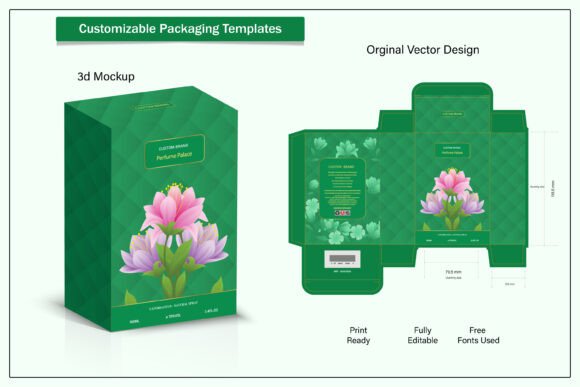
The technical precision offered by these templates also streamlines the production process. A proper box die line is essential for manufacturers to cut and fold the cardboard accurately. By utilizing editable files that include precise die lines, you minimize the risk of costly printing errors. This level of accuracy is particularly important for complex structures, such as the fragrance perfume luxury box, where intricate folds and precise alignments are necessary to achieve a sophisticated look. Designers can create their unique artwork and place it above in a separate layer, maintaining the structural integrity of the template while allowing for complete creative freedom.
Enhancing Creativity with 3D Visualization
Visualizing a two-dimensional design in a three-dimensional space can be challenging. This is where 3D box packaging design tools become invaluable. By providing realistic mockups, these resources allow designers and business owners to preview how light interacts with different materials, how shadows fall on embossed elements, and how the overall composition feels in a real-world setting. This capability supports better communication between designers, clients, and manufacturers, reducing the number of revision cycles and accelerating time-to-market.
For educators and hobbyists, these tools serve as excellent learning resources. They provide insight into the spatial relationships and structural engineering required in packaging design. By experimenting with different frames and design elements, users can develop a deeper understanding of balance, proportion, and visual hierarchy. This hands-on approach fosters creativity and encourages innovation, enabling users to push the boundaries of traditional packaging norms.
Practical Application and File Management
When acquiring digital design assets, understanding the file formats is crucial for efficient workflow integration. A comprehensive package typically includes multiple file types to cater to different stages of the design and production process. For instance, you might receive a zip file that contains:
- AI File: An Adobe Illustrator file that allows for full editability of vector elements, layers, and text. This is ideal for making significant design changes or adapting the template to specific brand guidelines.
- PDF Print File: A high-resolution PDF optimized for printing, ensuring that colors and fonts are embedded correctly for professional output.
- Jpg File: A raster image suitable for quick previews, web use, or sharing concepts with stakeholders who do not have design software.
To access these files, you can use free software such as WinRAR or WinZip to unzip the archive. It is important to note that this is a digital cut file. No physical items will be mailed to you. Please note this is a mockup file. You will receive an editable version to customize for business or personal uses. However, no template for making the physical box is included. This distinction is vital for managing expectations; the digital asset provides the visual and structural blueprint, but the actual manufacturing requires collaboration with a printing partner who can interpret the die lines and material specifications.
Who Benefits Most from Professional Templates?
Small business owners and startups benefit immensely from these resources by reducing upfront design costs. Instead of hiring a specialized packaging designer, they can utilize high-quality templates as a foundation, customizing them to reflect their brand identity. Freelancers and agencies can also leverage these assets to speed up their workflow, offering clients rapid prototypes and polished presentations without starting from scratch.
Marketers and bloggers find value in the visual consistency these templates provide. High-quality images of products in elegant boxes enhance content creation, making blog posts, social media updates, and advertising campaigns more engaging. The ability to generate realistic 3D illustrations means that marketing materials can be prepared even before the physical product is manufactured, allowing for pre-launch campaigns and early buzz generation.
Considerations and Limitations
While digital templates offer numerous advantages, it is essential to recognize their limitations. Since these are mockup files, they do not account for the specific material properties of the cardboard or paper stock you choose. Factors such as thickness, texture, and finish (e.g., matte, gloss, or soft-touch) can significantly alter the final appearance. Therefore, it is advisable to request physical proofs from your manufacturer before committing to a large print run.
Additionally, while vector designs are scalable, extremely complex details may require careful adjustment to ensure they reproduce clearly at smaller sizes. Designers should always review their work at actual size to check for legibility and visual balance. By combining the flexibility of digital templates with the expertise of professional printers, you can achieve a result that is both visually stunning and structurally sound.
In conclusion, box packaging design is a powerful tool for brand building and customer engagement. By utilizing professional vector templates, 3D visualization tools, and precise die lines, businesses of all sizes can create premium packaging that stands out in the marketplace. Whether you are designing a luxury perfume box or a simple product container, the right digital assets can simplify the process, enhance creativity, and deliver a polished final product that resonates with your audience.