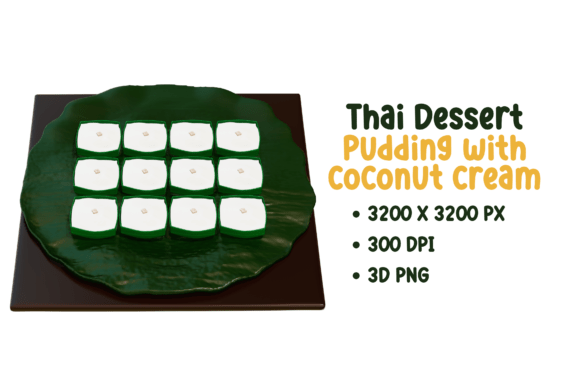
Thai Dessert 3D Clipart for Creative Projects
In the vibrant world of digital design, visual assets serve as the bridge between a concept and its audience. Among the most captivating niches in recent years is culinary illustration, specifically those that capture the essence of cultural heritage through modern techniques. Thai Dessert 3D Clipart represents a unique fusion of traditional aesthetics and contemporary digital artistry. These assets are not merely decorative; they are functional tools that allow creators to infuse their work with warmth, texture, and an inviting sense of sweetness.
Consider the specific allure of a pudding topped with rich coconut cream. This classic combination is a staple in Thai cuisine, known for its comforting texture and balanced flavors. When rendered in high-quality 3D hand-drawn style, it becomes more than just food imagery—it becomes a storytelling element. For designers, marketers, and small business owners, utilizing such specific and culturally rich visuals can significantly enhance brand identity and user engagement. The key lies in understanding how to integrate these elements seamlessly into broader design ecosystems.
The Appeal of Hand-Drawn 3D Aesthetics
The term "3D hand-drawn" might seem contradictory at first glance, but it describes a popular artistic style that blends the depth and volume of three-dimensional modeling with the organic, imperfect charm of manual illustration. Unlike sterile, computer-generated renders, hand-drawn 3D clipart retains a human touch. It features soft lighting, subtle textures, and a playful approach to proportion that feels approachable and friendly.
This style is particularly effective for brands aiming to project authenticity and care. In a market saturated with generic stock photography, a custom-style illustration stands out. It suggests that attention to detail was prioritized, mirroring the care put into the products or services being advertised. For instance, a bakery using Thai Dessert 3D Clipart on its packaging signals a commitment to quality and artistic presentation, distinguishing itself from competitors who might use standard, flat icons.
Practical Applications for Diverse Creators
The versatility of high-resolution digital assets allows them to be adapted across various mediums. Understanding the technical specifications is crucial for maximizing their potential. With images sized at 3200×3200 pixels and a resolution of 300 DPI, these files are print-ready. This means they maintain sharpness and vibrancy whether displayed on a retina screen or printed on physical merchandise.
- Print-on-Demand Merchandise: Entrepreneurs can incorporate these designs into tote bags, aprons, or kitchen towels. The high resolution ensures that the intricate details of the coconut cream texture remain clear even on fabric.
- Digital Planners and Scrapbooks: For the hobbyist community, these cliparts add a thematic flair to digital planning. Users can decorate pages dedicated to food journals, travel logs about Southeast Asia, or monthly meal planners.
- Marketing Materials: Restaurants and cafes can use these visuals in social media campaigns, menu headers, or promotional flyers. The appetizing nature of the imagery helps stimulate customer interest and desire.
- Packaging Design: Small businesses selling actual Thai desserts or related products can use these illustrations on labels and boxes. It creates a cohesive brand look that is both professional and charming.
Each application requires a slightly different approach to composition. For merchandise, the focus should be on central placement and contrast against the background material. For digital products, layering the clipart with other elements like text or patterns can create dynamic layouts.
Navigating Commercial Usage Rights
One of the most significant advantages of purchasing premium digital assets is the clarity of usage rights. When you acquire Thai Dessert 3D Clipart with commercial use permissions, you gain the freedom to monetize your creativity. However, it is essential to understand the boundaries of these licenses to maintain ethical and legal standards.
Typically, commercial use allows you to integrate the clip art into your own original designs. This means you can create a poster, a website banner, or a product package that features the image as part of a larger composition. You are adding value through your design skills, layout choices, and additional content. What is generally prohibited is the standalone resale of the asset. You cannot simply download the PNG file and sell it as-is on another platform. This restriction protects the original artist’s intellectual property while still granting you extensive creative freedom.
By adhering to these guidelines, you support the ecosystem of digital artists who produce these high-quality resources. It ensures that creators can continue to invest time in producing detailed, hand-drawn works that benefit the entire design community.
Design Tips for Maximum Impact
To make the most of your Thai Dessert 3D Clipart, consider the context in which it will be viewed. Color theory plays a vital role here. Thai desserts often feature warm tones—creamy whites, golden yellows, and vibrant greens from pandan leaves. Pairing these with complementary background colors can make the subject pop. For a clean, modern look, use ample white space around the clipart. For a cozy, rustic feel, pair it with textured backgrounds like kraft paper or wood grain.
Consistency is another key factor. If you are building a brand identity, try to use clipart from the same artist or collection. This ensures that the lighting, shadow styles, and line weights remain uniform across all your materials. Mixing disparate artistic styles can sometimes result in a disjointed visual experience for your audience.
Furthermore, think about the emotional response you want to evoke. Food imagery is inherently sensory. Use descriptive language in your accompanying text to reinforce the visual appeal. Words like "silky," "rich," "aromatic," and "handcrafted" work well alongside images of pudding with coconut cream. This multisensory approach strengthens the connection between the viewer and your content.
Expanding Your Creative Horizon
Beyond immediate commercial applications, these assets can serve as inspiration for broader creative projects. Educators might use them in cultural studies presentations to discuss Southeast Asian cuisine. Bloggers can use them to break up text in articles about travel or cooking, making the content more engaging and visually appealing. Even interior designers might use high-quality prints of these illustrations as part of a themed decor scheme for restaurants or cafes.
The instant download format facilitates rapid iteration. You can test different layouts, color schemes, and compositions without waiting for physical proofs. This agility is invaluable in today’s fast-paced digital landscape, where trends shift quickly and the ability to adapt is a competitive advantage.
Ultimately, the value of Thai Dessert 3D Clipart lies in its ability to convey complex cultural and sensory experiences through simple, elegant visuals. It allows creators to tell stories without words, inviting audiences to appreciate the beauty of Thai culinary traditions. Whether you are designing a single social media post or a comprehensive brand package, these assets provide a solid foundation for creative expression.
By choosing high-quality, ethically sourced digital art, you not only enhance your own projects but also contribute to a culture of respect and appreciation for digital craftsmanship. As you integrate these elements into your work, remember that the goal is to create something that resonates with your audience—something that feels both professional and personally crafted. With the right tools and a clear vision, the possibilities are as endless as your imagination.